Oxford Street Goes Pedestrian: Why London's New Shopping Hub Is a Great Change for Tourists
Picture the Oxford Street you know: red double decker buses nose to tail, black cabs inching along, and pavements so packed you shuffle sideways past Selfridges with your shopping bags held high. From today, Monday 26 October 2026, that picture changes. Almost a kilometre of London's most famous shopping street now belongs to pedestrians.
With around half a million visitors a day, Oxford Street is one of the busiest shopping streets in Europe. Here's what has changed, what's coming next and how to make the most of it on your next trip to London.
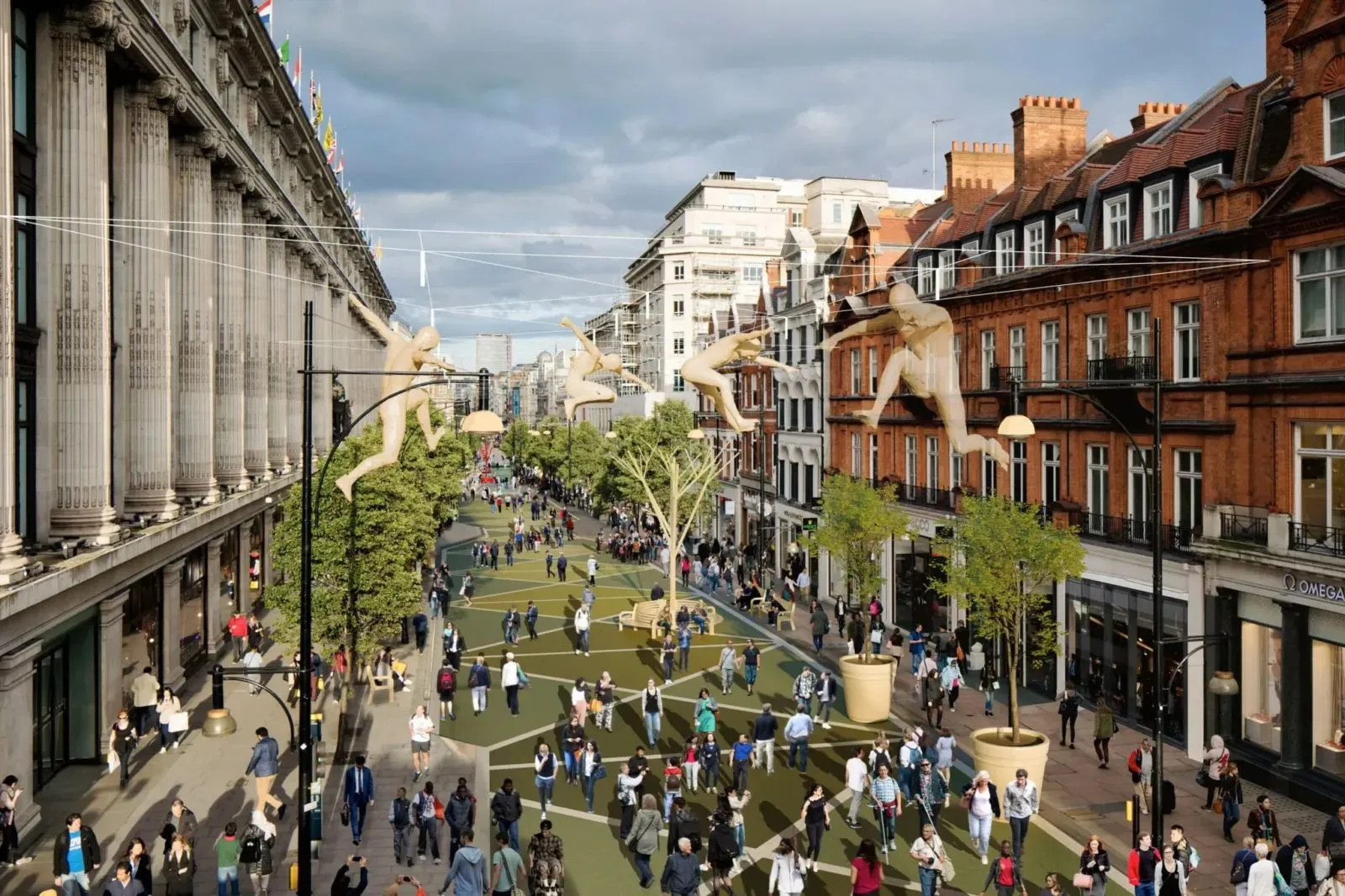 Early concept proposal for pedestrian only Oxford Street
Key Takeaways
- Oxford Street went traffic free on Monday 26 October 2026
- The pedestrian stretch runs for almost 1km (0.6 miles) from Orchard Street to Great Portland Street, roughly Selfridges to just past Oxford Circus
- Cars, buses, taxis, bikes, scooters and pedicabs are all off this section, while emergency vehicles keep access at all times
- Delivery vans can only come in overnight, between midnight and 7am
- The plan is led by the Mayor of London, Sir Sadiq Khan, and delivered by the Oxford Street Development Corporation (OSDC) with Transport for London
- Seating, planters and rest areas arrive over winter, with more than 50 trees and two new public squares planned by spring 2027
- It's all timed for the Christmas shopping season, so this year's festive trip will feel very different
What's happening on Oxford Street?
Which part of Oxford Street is pedestrianised?
The car traffic free section runs from Orchard Street to Great Portland Street. In landmark terms, that's from Selfridges in the west to just past Oxford Circus. The eastern end towards Tottenham Court Road stays open to traffic for now, and a few side streets still cross at junctions, so you'll still meet the odd pedestrian crossing.
Buses that used to run along the street have moved to nearby Wigmore Street and Henrietta Place, where new stops and shelters have been put in.
Who is behind the change?
The project is led by the Mayor of London, Sir Sadiq Khan, and delivered by the Oxford Street Development Corporation, a new body set up on 1 January 2026 to lead the street's transformation, working alongside Transport for London.
Londoners were on board too. A 2025 public consultation drew more than 6,000 responses, and around two thirds of those who gave a view supported making the street pedestrian only. The Mayor has said the change arrives just in time for Christmas shopping.
A long time coming
The idea has been around for years. An earlier plan was blocked by Westminster City Council in 2018. Then a traffic free day in September 2025 gave everyone a taste, and city figures showed visitor numbers up by around 45% on the week before.
Westminster Council and some local residents still have questions about traffic moving onto nearby streets and about access. The Oxford Street Development Corporation says it will keep gathering feedback from residents, businesses and accessibility groups as the scheme takes shape.
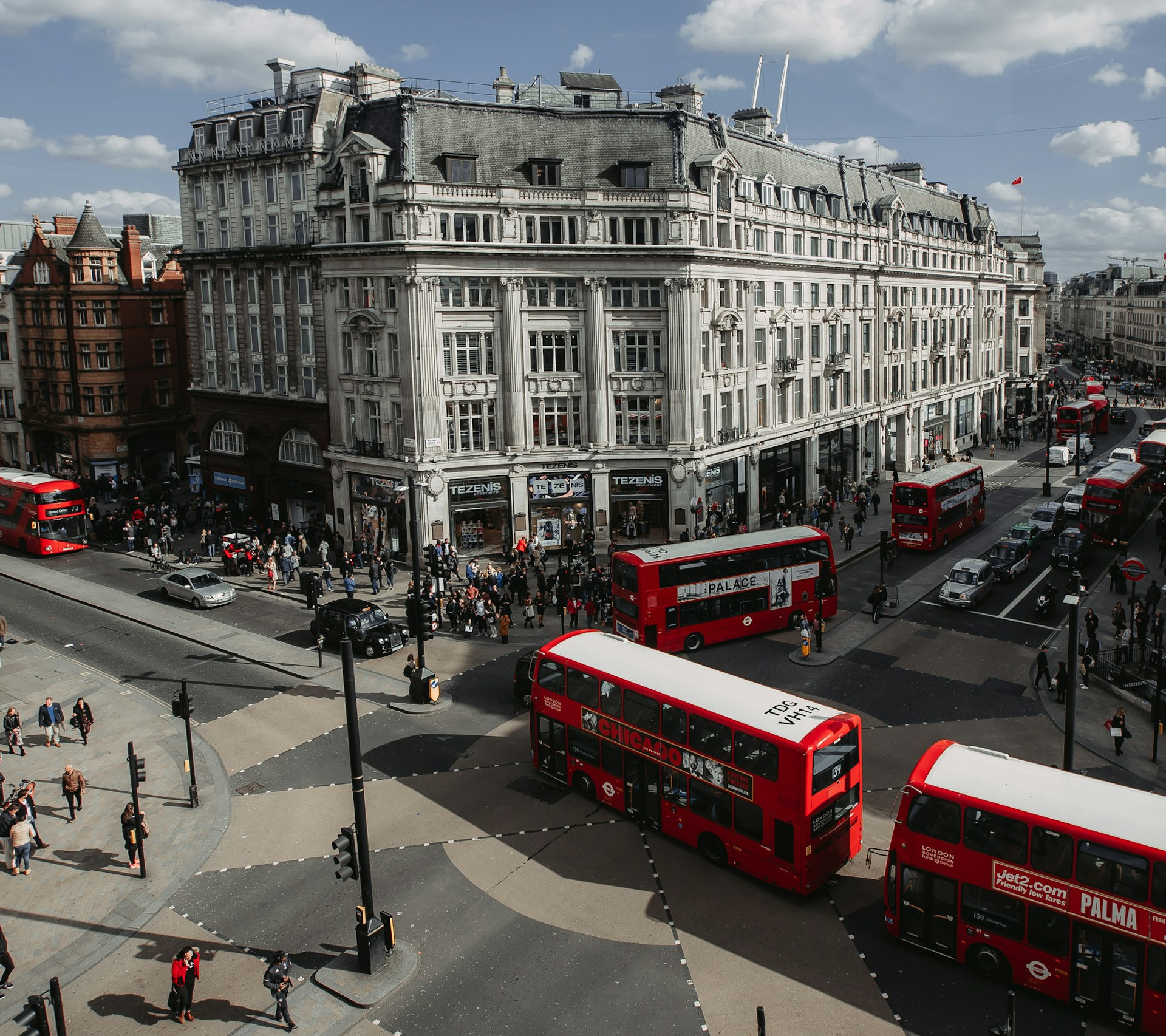 Old view of Oxford Street in London with motor traffic present
Why a pedestrian only Oxford Street is great news for shoppers
This is where things get exciting for visitors. Taking the traffic out changes how the whole street feels.
- Room to breathe: wide open space instead of crowded pavements, and no more stepping into the road to get round a queue
- Calmer and quieter: no idling buses or taxi engines, so you can hear the street music and actually chat with your friends
- Cleaner air: a welcome change for a street that once had a reputation as one of the most polluted in Europe
- Easier for families: more space for prams, buggies and little ones who like to wander
- Places to pause: benches, tables and trees mean you can rest, people watch and refuel between shops
- A street with events: the Mayor wants fashion, sport and cultural events on the street, so keep an eye out for pop ups and festive moments
Our take: what you'll notice in the first five minutes
Step out of Bond Street station and the first thing you notice is the view. You can see right across the street, from shop window to shop window, with no bus blocking the way. Then there's the sound. Instead of engines and horns, you hear chatter, footsteps and maybe a busker warming up. And the best bit? No more zigzagging. You can drift from one side to the other on a whim, which is exactly how London shopping should feel like.
Planning your trip: a visitor's guide
Getting to London's famous Oxford Street
- By Tube: Marble Arch (just west of the stretch), Bond Street (Central line and Elizabeth line) and Oxford Circus (Central, Victoria and Bakerloo lines)
- From Heathrow: the Elizabeth line runs straight to Bond Street, so you can be shopping soon after landing
- By bus: buses now stop on Wigmore Street and Henrietta Place, a short walk north
- By taxi: cabs and rideshares drop off on side streets, not on Oxford Street itself
Good to know before you go
- No cycling or scooters on the pedestrian stretch, so hop off and walk your bike
- New drop off points and more Blue Badge parking are planned nearby, so check Transport for London for the latest before you travel
- Weekday mornings are best for calm browsing, while late afternoons in November and December are perfect for the lights
- Visiting from the US or further afield? The UK no longer offers VAT refunds on shopping for tourists, so budget for the price on the tag
A simple walking route for first timers
- Start at Selfridges, the grand department store at the western end
- Stroll east past the big flagship stores, now with plenty of room to look up and around
- Detour north to St Christopher's Place or Marylebone High Street for lunch in a quieter, village style setting
- Head back to Oxford Street and carry on to Oxford Circus
- Finish by drifting south onto Regent Street or popping into Liberty, with its famous Tudor style building
Christmas on the new Oxford Street
Oxford Street's Christmas lights are a London tradition, and this year you'll finally have space to stop and look up without being swept along by the crowd. Festive shopping without the crush is the dream, and this season it's real. Expect high demand for trips to London in November and December, so book your travel and your stay early.
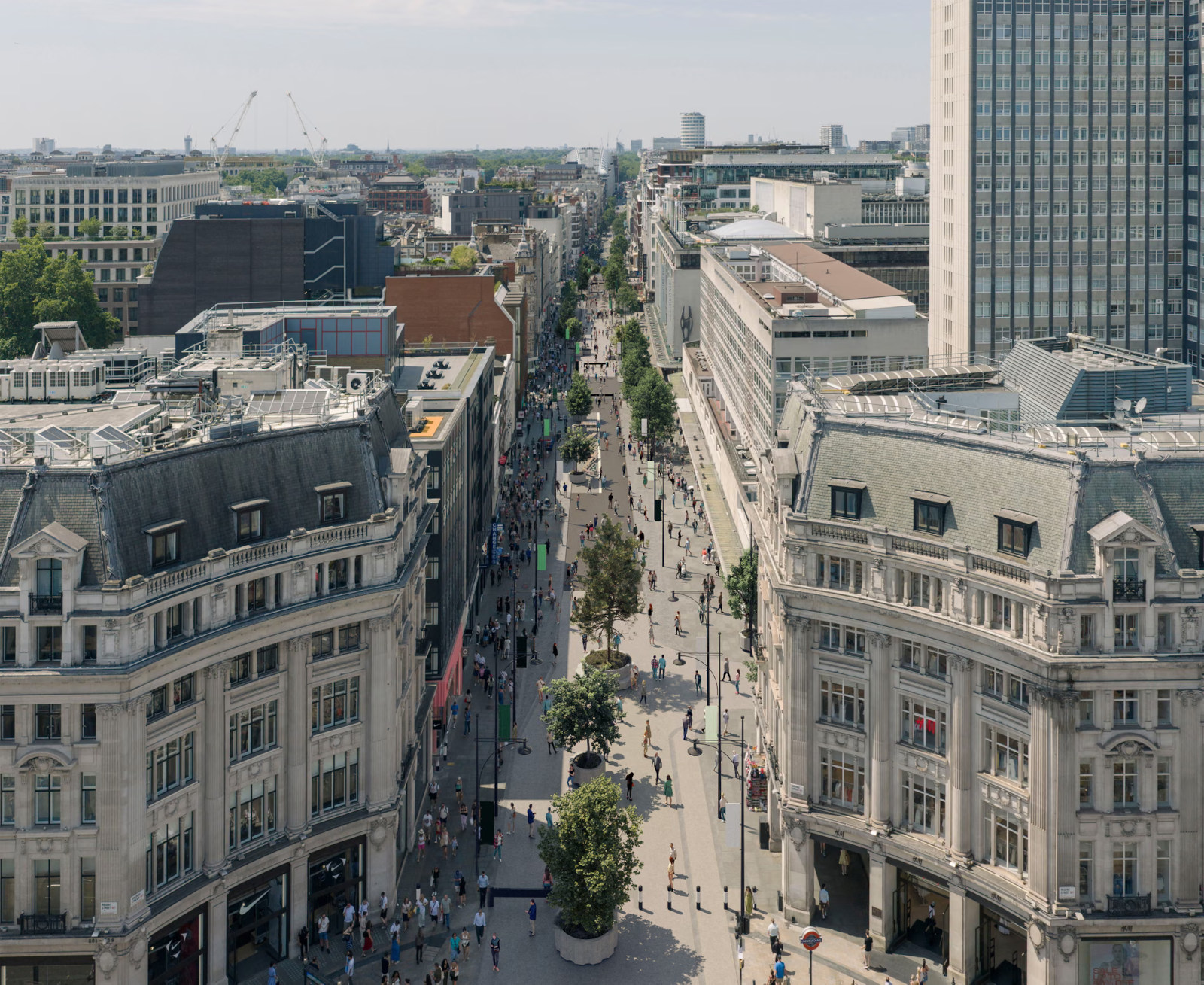 A mockup of how Oxford Street could look like in 2027
What's next? From now to Spring 2027
Today is just the start. Here's how the street is set to change:
- 26 October 2026: traffic removed from the central stretch
- Autumn and winter: temporary seating, planters and bollards arrive while the team gathers feedback on how people use the space
- By spring 2027: more than 50 trees, two public squares, better signage and dining tables
- Later: a permanent design shaped by that feedback, with any further phases subject to consultation
Our tip? Visit at Christmas, then come back in Spring and see the street bloom.
Where to stay for a London shopping trip
Staying close to Oxford Street means you can drop your shopping bags back at the hotel and head out again for dinner in Marylebone or a show in the West End. Hotels in Marylebone, Mayfair and Fitzrovia put you within an easy walk of the new pedestrian street. Take a look at our London hotels to find your perfect base for a shopping weekend.
Frequently Asked Questions
When did Oxford Street become pedestrianised?
The central stretch went traffic free on Monday 26 October 2026.
Is all of Oxford Street pedestrianised?
Not yet. The pedestrian section runs from Orchard Street to Great Portland Street, while the eastern end stays open to traffic for now.
Can I still get a bus to Oxford Street?
Yes. Buses now stop on nearby Wigmore Street and Henrietta Place, just a short walk away.
Can I cycle on Oxford Street?
No. Cycles and scooters are not allowed on the pedestrian section, so you'll need to dismount your bike.
Is Oxford Street pedestrianized for good?
Yes, this is the first phase of a permanent plan, and the design will keep evolving until spring 2027.
What's the nearest station?
Bond Street and Oxford Circus sit right on the pedestrian stretch, with Marble Arch just to the west.
Final thoughts
One of the world's most famous shopping streets is finally built around people, not cars. Whether you're flying in from New York or catching the train from Manchester, there's never been a better time to rediscover Oxford Street. Plan your trip, pack comfy shoes and save some room in your suitcase ;].